Published September 24, 2026
Safest Areas to Stay in Dominican Republic: 2026 Travel Guide

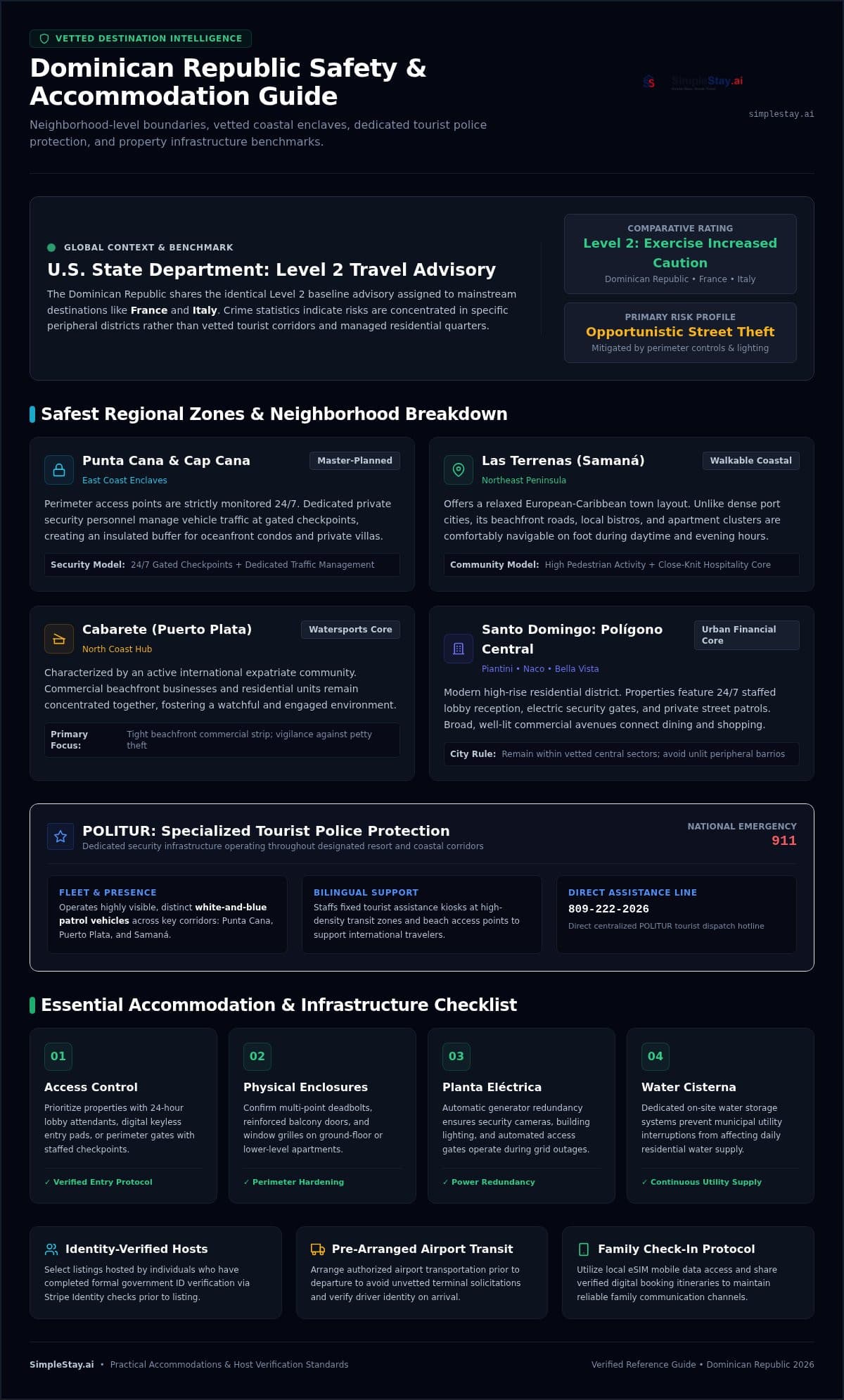
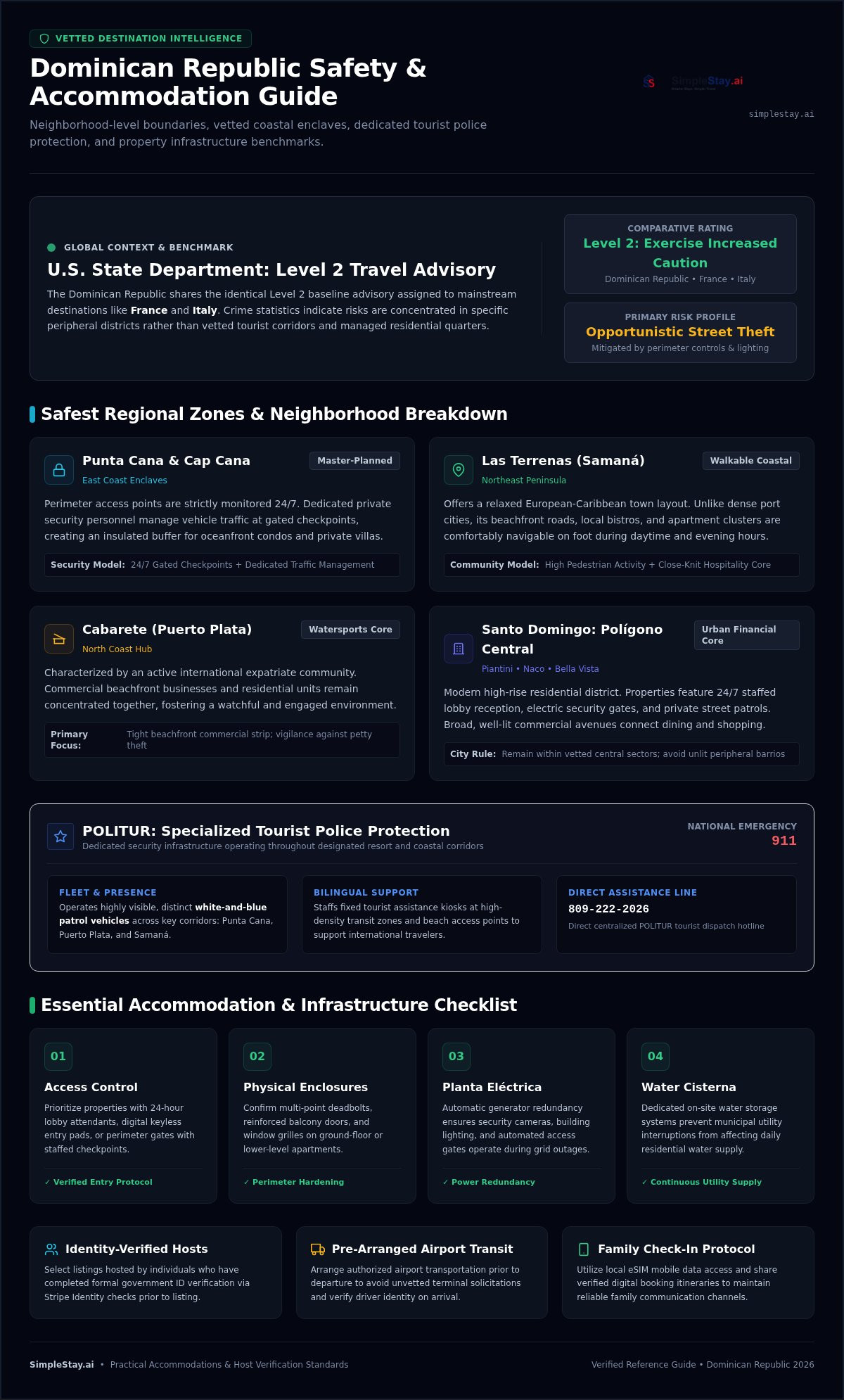
You don't need to lock yourself inside an all-inclusive mega-resort to enjoy a secure Caribbean vacation. In reality, identifying the safest areas to stay in Dominican Republic comes down to understanding neighborhood-level boundaries and choosing accommodations with reliable infrastructure. While alarming headlines often create unnecessary anxiety for travelers and their families, the country holds a Level 2 travel advisory from the U.S. State Department, the same rating given to popular destinations like France and Italy.
We know how difficult it can be to separate dramatic online rumors from on-the-ground reality, especially when planning transit from the airport or evaluating city districts like Piantini and the Zona Colonial. This guide delivers vetted, practical details on the country's most secure coastal towns and urban quarters, backed by actionable standards to evaluate rental security before you reserve. Here is what you need to know to navigate your 2026 stay comfortably and confidently.
Key Takeaways
- Pinpoint the safest areas to stay in Dominican Republic, contrasting access-controlled communities like Cap Cana with walkable coastal hubs like Las Terrenas.
- Learn how dedicated POLITUR tourist police patrols and gated residential perimeters establish reliable baseline security across tourist corridors.
- Protect your arrival by choosing properties managed by identity-verified hosts and arranging official airport transit before your flight lands.
- Reassure family members back home using simple communication protocols, from verified digital itineraries to local eSIM data access.
Table of Contents
Safest Areas to Stay in Dominican Republic: Regional Breakdown
Finding the safest areas to stay in Dominican Republic requires looking past generic travel warnings and examining local community layouts. Safety changes dramatically between bustling transit hubs and residential districts with established infrastructure. Understanding verified regional boundaries lets you choose independent villas or city apartments without second-guessing your security.
Broad analyses of Crime in the Dominican Republic show that violent incidents are heavily concentrated in specific urban zones rather than tourist corridors. By selecting well-managed towns and modern municipal centers, you keep real-world travel risks exceptionally low.
Gated Enclaves and Coastal Beach Towns
Coastal destinations present distinct security setups depending on how they grew:
- Punta Cana and Cap Cana: Master-planned communities here monitor perimeter access points around the clock. Private security teams manage traffic at entry gates, creating a protected buffer for private villas and oceanfront condos.
- Las Terrenas: Located on the Samaná Peninsula, this town delivers a walkable, relaxed European-Caribbean community. Unlike busy commercial port cities, its beach roads, bistros, and apartment clusters are easily navigated on foot during daytime and evening hours.
- Cabarete: Known as the north coast's active watersports hub, Cabarete features an engaged expatriate population. The main beachfront strip keeps businesses close together, offering a watchful community environment where petty theft remains the primary, avoidable concern.
Secure Urban Neighborhoods in Santo Domingo
In the capital, safety depends directly on staying inside the Polígono Central. Neighborhoods like Piantini, Naco, and Bella Vista represent the city's commercial and financial core. High-rise apartment buildings in these sectors routinely feature 24/7 lobby attendants, electric gates, and private street patrols.
You can walk comfortably between upscale shopping plazas and international restaurants along well-lit avenues. Avoid wandering into outer peripheral barrios, particularly after dark. Sticking to vetted central districts ensures you experience authentic urban life with modern residential peace of mind.
Evaluating Neighborhood Safety: Essential Accommodation Checklist
Even within the safest areas to stay in Dominican Republic, physical security depends heavily on property-level standards. A destination might feature quiet streets, but an apartment without basic security measures leaves you vulnerable. Evaluating properties requires looking beyond attractive listing photography to examine real building security and utility redundancies.
Official guidance, including recent updates from UK government travel advice, highlights that opportunist theft and street robbery represent the most common hazards for visitors. Choosing an accommodation with active perimeter control and proper lighting drastically cuts down these risks.
Municipal Protection and Tourist Police Coverage
The specialized tourist police, known as POLITUR, maintain dedicated patrols throughout established tourist corridors. With thousands of officers stationed across primary regions like Punta Cana, Puerto Plata, and Samaná, their visible presence discourages petty theft.
POLITUR units operate distinct white-and-blue vehicles and staff bilingual assistance kiosks. If you face an issue, emergency dispatch connects directly through 911 or through POLITUR hotlines (809-222-2026). Outside of these designated zones, municipal police response times can vary significantly.
Physical Property Features to Confirm Before Booking
Before reserving an apartment or private villa, confirm these baseline security and utility features with the host:
- Access Control: Look for 24-hour lobby security, digital keypads, or gated entrances with staffed checkpoints.
- Physical Enclosures: Verify multi-point deadbolts, ground-floor window grilles, and secure balcony doors.
- Backup Power (Planta Eléctrica): Municipal outages happen. A building with an automatic generator keeps interior lighting, security cameras, and electronic gates working during a grid failure.
- Water Cistern (Cisterna): Dedicated storage guarantees uninterrupted water supply regardless of municipal rationing.
Review our detailed overview of Dominican Republic apartment rentals to inspect these property details before completing your booking.
How to Choose Secure Accommodations and Reliable Local Transport
Even when you head to the safest areas to stay in Dominican Republic, unvetted listings and chaotic transit hubs can create unnecessary vulnerability. Protecting your stay means confirming who manages the property and securing reliable transportation before your flight lands.
Protecting Reservations with Host Verification
Listing scams usually involve unverified intermediaries or copied property photos. Booking rentals with identity-verified hosts protects against arrival-day surprises, as these hosts complete a government ID verification via Stripe Identity before publishing their spaces. Learn more about these standards in our guide to vacation rental identity verification. Beyond verification badges, check recent reviews to confirm host communication, gate responsiveness, and neighborhood noise levels.
Transit Logistics from Major Dominican Airports
Exiting terminals at Punta Cana (PUJ), Las Américas in Santo Domingo (SDQ), or Puerto Plata (POP) puts you directly in front of persistent, unregulated taxi touts. Don't negotiate with informal drivers outside arrival gates. Overcharging and unmetered routes remain common issues.
Pre-arrange transfers through your accommodation or a registered transport company so your driver waits with official signage. In Santo Domingo and Santiago, established ride-hailing apps offer transparent pricing and tracked GPS routes. While rental cars grant freedom, Dominican roads have high traffic fatality rates and difficult night driving. For direct trips between the airport and the safest areas to stay in Dominican Republic, pre-booked private shuttles provide the most reliable transit.
Practical Safety Protocols to Reassure Concerned Family Members
Traveling independently often sparks worry among family members who rely on dramatic headlines. Setting up a structured communication plan and practicing disciplined day-to-day habits immediately quiets those concerns. When you base your trip in the safest areas to stay in Dominican Republic, sharing your concrete preparations provides instant peace of mind back home.
Communication Plans and Emergency Preparation
Draft a complete digital itinerary before departure. Include your property address, check-in instructions, and your host's direct messaging details. Share this document alongside key local dispatch numbers:
- National Emergency: Dial 911 for unified police, medical, and fire dispatch.
- POLITUR Hotlines: Save 809-222-2026 and 809-200-3500 for direct tourist police assistance.
- U.S. Embassy Consular Services: Keep +1-809-567-7775 stored for passport emergencies or urgent citizen support.
Maintain continuous mobile connectivity by setting up an international roaming plan or installing a local data eSIM on arrival. Agree on simple daily check-in windows, such as a quick text after breakfast, so relatives know exactly when to expect an update.
Smart Cash, Valuables, and Nighttime Practices
Opportunistic crime drops when you eliminate visible temptations. Withdraw Dominican pesos from commercial bank-branch ATMs during regular business hours instead of using exterior sidewalk cash machines. Keep cards in plain sight during restaurant payments to avoid card skimming.
Leave flashy designer watches, heavy gold chains, and loose luxury items at home. When returning to your residence after dark, take direct private shuttles or tracked ride-hailing services right to your building entrance. For high-privacy accommodation inside secure, gated compounds, consider our curated villa rentals in the Dominican Republic. You can also explore vetted apartments directly on SimpleStay Search with zero added guest service fees.
Plan Your Dominican Getaway with Confidence
Securing a memorable Caribbean trip doesn't require staying behind resort walls. When you target the safest areas to stay in Dominican Republic, such as Santo Domingo's Polígono Central or coastal enclaves like Cap Cana and Las Terrenas, you enjoy local culture alongside proven infrastructure. Pairing these vetted destinations with properties featuring backup generators, secure access points, and pre-arranged airport transit ensures you stay protected every step of the way.
Smart planning turns travel apprehension into genuine relaxation. Transparent bookings begin with clear accountability, which is why SimpleStay requires a Stripe Identity check for every host before listing apartments or villas, all while keeping guest service fees at exactly zero.
Pack your bags, establish your simple daily check-in routine, and get ready to experience the Dominican Republic on your own terms with total confidence.
Frequently Asked Questions
Is the Dominican Republic safe for independent travelers outside all-inclusive resorts?
Yes, independent travel is practical and common across the country. Sticking to the safest areas to stay in Dominican Republic, such as Las Terrenas, Punta Cana, or central Santo Domingo, minimizes serious risks. Opportunistic theft is the main issue travelers face. You can avoid most problems by arranging reputable transport, keeping valuables out of plain view, and booking properties with verified access control rather than wandering into unfamiliar peripheral districts.
What are the safest specific neighborhoods to rent an apartment in Santo Domingo?
The most secure neighborhoods for apartment rentals in Santo Domingo are Piantini, Naco, and Bella Vista within the Polígono Central. These upscale districts feature modern residential towers with 24/7 lobby attendants, underground parking, and continuous street security. Gazcue and the historic Zona Colonial are also popular, though you should stick to primary, well-lit corridors at night and verify that your building provides private access control.
How do tourist police (POLITUR) help foreign visitors in the Dominican Republic?
POLITUR operates as a specialized national police branch dedicated to protecting visitors in high-traffic destinations like Punta Cana, Puerto Plata, Samaná, and Santo Domingo's Colonial Zone. Their officers patrol on foot and in marked vehicles, assisting with directions, dispute resolution, and emergency reporting. If you encounter theft or suspect a street scam, you can contact POLITUR directly at 809-222-2026 or visit their local municipal assistance kiosks.
Is it safe to drive a rental car between cities in the Dominican Republic?
Driving yourself presents notable risks due to erratic traffic habits, unlit rural highways, and pedestrian crossings. Road accidents represent a much higher statistical threat than street crime across the island. Major highways connecting Santo Domingo, Santiago, and Punta Cana are modern during daylight, but nighttime driving is risky. Most independent travelers rely on pre-booked private transfers, express intercity coach lines like Metro or Caribe Tours, or city ride-hailing services instead.
How can I verify that a Dominican Republic vacation rental is legitimate before paying?
Protect your reservation by booking platforms that require identity checks for property managers. SimpleStay awards a Verified Host badge only after hosts complete a government ID check through Stripe Identity. Never send money via direct bank wire, cash transfers, or social media links. Always confirm essential infrastructure like backup power generators in the listing description, and review recent guest feedback regarding building access and host communication before paying by card.

Article by
Jaime Robledo, MBA
Jaime Robledo, MBA, is a technology leader, entrepreneur, and founder based in Santo Domingo, Dominican Republic, with more than two decades of experience building, modernizing, and securing enterprise technology environments. His career has spanned consulting, media, finance, education, healthcare, and large-scale corporate IT, with deep expertise in Microsoft technologies, cloud infrastructure, endpoint management, automation, cybersecurity, AI, and digital transformation.
Throughout his career, Jaime has led complex technical initiatives involving Microsoft Intune, Microsoft 365, Defender, SCCM, Azure, PowerShell, DevOps, Windows modernization, and enterprise infrastructure. His experience combines hands-on engineering, technical leadership, business strategy, and execution.
Today, Jaime is focused on building technology companies designed specifically for Latin America. He is the founder of SimpleStay.ai, a rental and hospitality platform created to make booking, hosting, rent payments, and property management more transparent and affordable through flat pricing, zero guest service fees, secure payments, identity verification, and support for short-term, hotel, and long-term rentals.
He also built United Empresas, a marketplace connecting customers with local service professionals for discovery, booking, payments, and business growth.
Beginning in January, Jaime will also be building a new fintech platform in public, focused on making digital payments and money movement simpler and more accessible across Latin America.
Across every venture, Jaime’s mission is the same: use technology, AI, automation, and practical business systems to reduce friction, create jobs, strengthen small businesses, expand financial access, and improve people’s lives throughout Latin America.