Published August 16, 2026
Safer Alternative to Airbnb in the Dominican Republic: A 2026 Security Guide

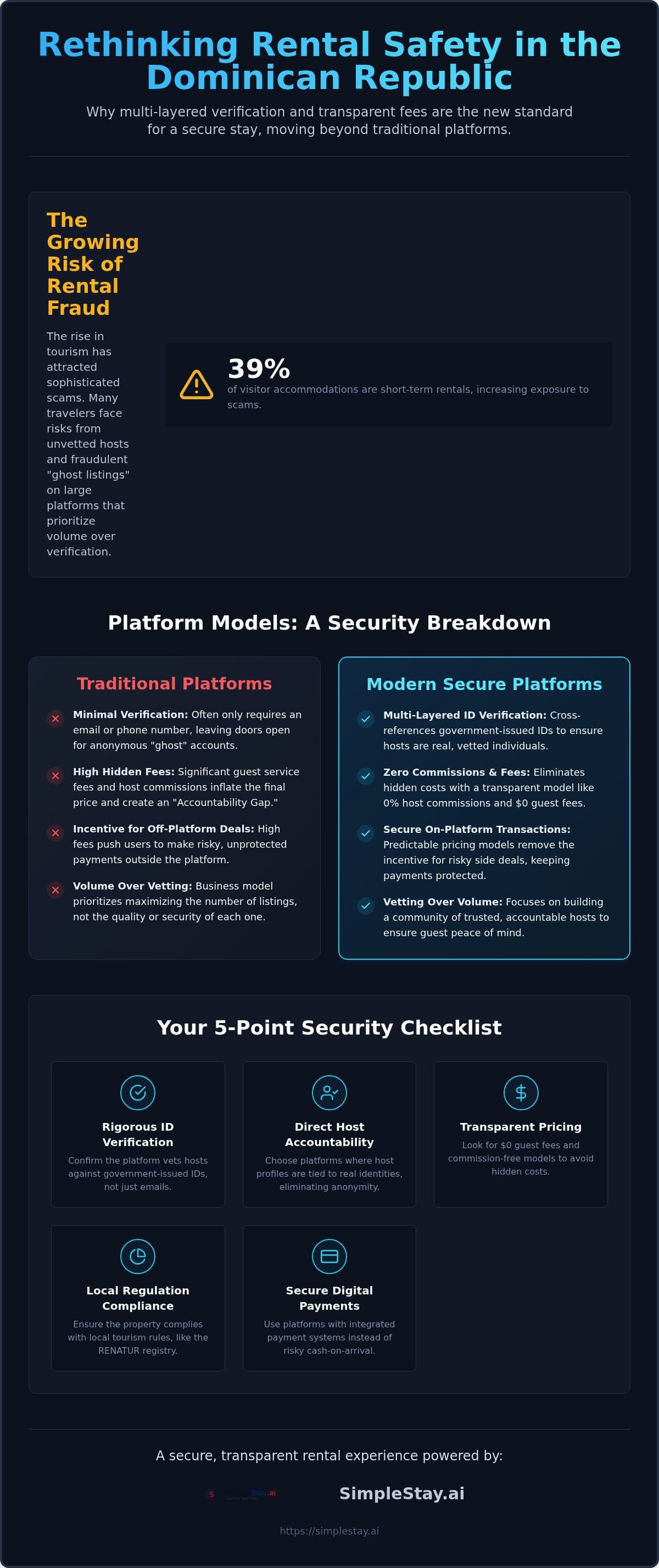
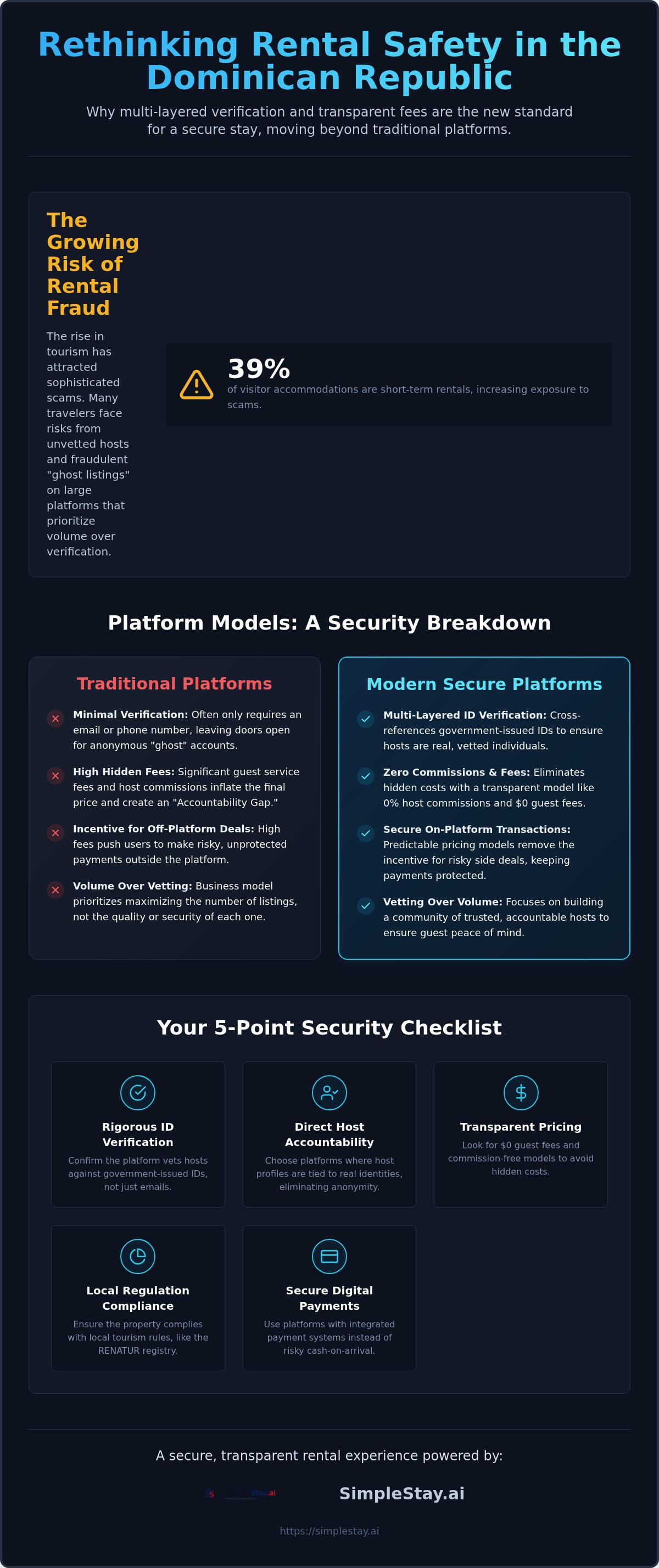
Would you pay a premium for a rental listing if you knew the host's identity was never actually verified? With short-term rentals accounting for 39% of all visitor accommodations in the Dominican Republic in early 2026, the risk of encountering a fraudulent listing is higher than ever. Many travelers are now seeking a safer alternative to Airbnb DR because they're tired of high service fees and the anxiety that comes with unvetted profiles. It's frustrating to plan a dream vacation only to feel like you're navigating a minefield of anonymous hosts and hidden costs.
We understand that security and transparency shouldn't be luxury add-ons. You deserve to know that the person you're booking with is a real, vetted individual without being punished by platform commissions. This guide will show you how identity verification and commission-free models are creating a more secure way to book rentals across the country. We'll explore how to find verified properties with transparent pricing, ensuring your stay is defined by relaxation rather than worry. You'll discover a modern approach to Dominican hospitality that prioritizes your peace of mind and your budget.
Key Takeaways
- Identify the importance of multi-layered identity verification for both hosts and guests to eliminate fraudulent listings and bait-and-switch scams.
- Discover why choosing a safer alternative to Airbnb DR involves platforms that prioritize direct accountability and vetted host profiles.
- Learn how commission-free models and $0 guest service fees provide transparent pricing without the hidden costs of traditional booking sites.
- Follow a 5-point checklist to evaluate platform security and ensure your rental complies with evolving local tourism regulations.
- Understand how modern digital payment systems protect your financial data while replacing risky and outdated cash-on-arrival requirements.
Table of Contents
- Why Travelers are Seeking a Safer Alternative to Airbnb in the Dominican Republic
- Redefining Security: The Role of Identity Verification in Vacation Rentals
- Beyond Safety: Eliminating Hidden Fees and Market Scams
- How to Choose a Secure Rental Platform for Your DR Stay
- SimpleStay: The Secure, Zero-Fee Solution for Dominican Republic Rentals
Why Travelers are Seeking a Safer Alternative to Airbnb in the Dominican Republic
In 2026, the definition of a safe stay has changed. It's no longer just about a physical lock on the door. It's about knowing exactly who you're dealing with before you land. The massive growth in tourism in the Dominican Republic brought over 6.6 million visitors in the first half of this year alone. While this growth is exciting, it has also attracted sophisticated rental scams. Travelers now need a safer alternative to Airbnb DR that closes the gap between a digital listing and physical reality.
The U.S. Department of State maintains a Level 2 travel advisory for the country. While resort areas are generally well policed, urban rentals require more caution. The biggest risk for travelers isn't always physical crime; it's the financial and emotional toll of fraudulent listings. Large platforms often prioritize volume over vetting. They allow thousands of new hosts to sign up with minimal friction. This creates a false sense of security based on brand size rather than actual verification. True safety in 2026 requires direct accountability and verified identities.
The Problem with 'Ghost Listings' and Fraud
Fraudulent listings often operate on major platforms by using stolen photos of luxury villas or apartments they don't own. Because many sites use automated signups, these "ghost listings" can stay active for weeks before being flagged. This lack of human vetting puts your vacation at risk. You should watch for specific red flags when browsing Dominican rentals. Be wary of prices that seem too good to be true for the area. If a host pressures you to move communication to an external app immediately, it's a sign they want to avoid platform oversight. Always check if the property complies with the new RENATUR registry requirements. Requirements vary by jurisdiction, so you should consult local professionals if you're unsure about specific legal compliance.
The Hidden Risks of High Commission Platforms
High guest service fees and host commissions do more than just inflate your bill. They create a dangerous "Accountability Gap." When a platform takes a significant cut, both parties are incentivized to take the transaction offline to save money. These unsecured "off-platform" deals offer zero protection if the property doesn't exist or is double booked. Direct booking models with built-in identity verification are becoming the new safety standard. They remove the middleman's high fees while keeping the security of digital payments. By eliminating excessive commissions, platforms can focus on rigorous vetting rather than just transaction volume. This shift ensures that your host is a real, accountable individual who is invested in providing a quality experience.
Redefining Security: The Role of Identity Verification in Vacation Rentals
Security in the vacation rental market isn't just a badge on a profile. It's a rigorous, multi-layered process that connects digital listings to real-world identities. Legacy platforms often use "Verified" icons that only indicate a user confirmed an email or a phone number. In 2026, that level of oversight is no longer enough to protect your investment. A truly safer alternative to Airbnb DR uses advanced identity verification to cross-reference government data in real time. This technical barrier makes it nearly impossible for fraudsters to operate anonymous "ghost" accounts.
When a platform prioritizes verification, it directly reduces the risk of "double booking" and "bait-and-switch" scams. These issues occur when a single property is listed multiple times by different unvetted accounts. By ensuring that every host is a real, accountable person, modern platforms eliminate the anonymity that scammers rely on. For solo travelers and families, this provides essential peace of mind. You aren't just renting a space; you're entering a transparent agreement with a vetted individual who is legally responsible for the property.
How Host Verification Protects Your Investment
The verification process starts with a deep dive into government-issued IDs. This ensures the person managing the listing is exactly who they claim to be. Vetted hosts are statistically more likely to provide accurate property descriptions because their real identity is tied to their performance. They know that any attempt to misrepresent a villa or apartment will have immediate consequences. This accountability ensures that the photos you see match the reality you find upon arrival. To understand the technical side of this protection, you can explore our vacation rental identity verification guide.
Guest Verification: Why It Matters for a Trusted Community
Safety is a two-way street. Guest vetting is just as vital for maintaining a secure rental ecosystem across the Dominican Republic. By verifying guest identities, platforms can prevent unauthorized parties, property damage, and neighborhood disturbances. This creates a circle of trust where hosts feel confident opening their doors and guests feel secure in their surroundings. When everyone in the community is vetted, the "Accountability Gap" disappears. It's a modern approach that values the tranquility of the neighborhood as much as the comfort of the guest. If you're a property owner who values this level of transparency, you can register your property to join our verified community.
Beyond Safety: Eliminating Hidden Fees and Market Scams
Safety and financial transparency are two sides of the same coin. When you look for a safer alternative to Airbnb DR, you aren't just looking for a secure lock. You're looking for a platform that doesn't hide the true cost of your stay. In the Dominican Republic, the rental market has historically been fragmented and cash-heavy. This lack of transparency leads to "hidden fee" fatigue and exposes travelers to significant financial risks. True security means knowing exactly where your money is going and having a digital trail to prove it.
The "Accountability Gap" we discussed earlier is often widened by high commissions. When platforms take a massive cut, the relationship between host and guest becomes transactional and strained. By moving toward a more direct, subscription-based model, platforms can prioritize user protection over profit-per-click. This shift creates a more honest environment where the focus remains on the quality of the stay rather than the size of the booking fee.
The Transparency of Zero Guest Service Fees
Most major booking platforms charge guests a service fee ranging from 15% to 20%. On a $1,500 villa rental, that's an extra $300 that doesn't benefit your host or improve your property experience. This "booking tax" often pushes guests to take risks by contacting hosts through unsecured, off-platform channels. A transparent model uses a "What You See Is What You Pay" philosophy. By eliminating guest service fees, platforms remove the incentive to bypass secure booking systems. You can learn more about how this works in our guide to zero booking fee vacation rentals. It's a simple equation: lower fees lead to higher platform compliance and better security for everyone.
Securing Payments in a Cash-Dominant Market
Scams involving wire transfers or "cash-on-arrival" requirements are still common in the Dominican Republic. Scammers often list a property and then ask for a deposit via wire transfer to "guarantee" the booking. Once the money is sent, the listing disappears. Digital payment processing modernizes this landscape by providing a digital paper trail and built-in fraud protection. Whether you're booking a weekend villa or a long-term apartment, using a credit or debit card is the only way to ensure your funds are protected. It's important to distinguish between platform fees and third-party costs. While a platform may charge $0 in service fees, standard third-party processing or banking fees still apply. Modernizing the DR market means moving away from risky cash transactions toward secure, card-based systems that protect both the renter and the host.
Disclaimer: Payment regulations and tax requirements vary by jurisdiction. You should consult with a financial or legal professional regarding specific transaction laws and rental contracts in your area.
How to Choose a Secure Rental Platform for Your DR Stay
Finding a safer alternative to Airbnb DR requires looking past high-quality photos. You need a platform that understands the local landscape and enforces strict security protocols. Global algorithms often miss the nuances of the Dominican market, such as the prevalence of off-platform payment scams. A secure platform acts as a professional filter, ensuring that every listing meets a specific standard of safety and accountability. Use this 5-point checklist to evaluate any rental site before you book:
- Identity Verification: Does the platform require government-issued ID from every host?
- Secure Payment Gateways: Are payments processed through encrypted, third-party providers rather than direct wire transfers?
- Transparent Pricing: Is the final price clear from the start, with $0 guest service fees?
- National Expertise: Does the platform show an understanding of local regulations like the RENATUR registry?
- Dispute Resolution: Is there a clear, responsive process for handling booking issues or property discrepancies?
Platform responsiveness is a major indicator of security. If a site takes days to answer basic safety questions, they likely won't be there when you need them during a trip. National platforms often outperform generic global sites because they focus on a single market. They understand local neighborhood trends and can verify property ownership more effectively than an automated system based thousands of miles away.
Evaluating Host Accountability and Reviews
Reading Caribbean reviews requires a discerning eye. Look for specific details about host communication and property accuracy rather than just general praise. Hosts who pay a flat monthly subscription for their listings often have more "skin in the game" than those on commission-only sites. They are professional operators who invest in their business and prioritize long-term reputation over quick, unvetted bookings. This model ensures that the host is as committed to a successful stay as you are.
The Importance of Secure Communication Channels
Never move your conversation to external apps like WhatsApp or Telegram before a booking is finalized. Secure on-platform messaging protects your personal data and travel plans from being intercepted. It also provides a verifiable record if a dispute arises. When communicating with hosts in the Dominican Republic, be direct and ask for confirmation of amenities. A professional host will be happy to provide clear answers and won't pressure you to bypass the platform's secure systems. Staying within the platform's ecosystem is your best defense against bait-and-switch tactics.
SimpleStay: The Secure, Zero-Fee Solution for Dominican Republic Rentals
SimpleStay provides a unified platform for property rentals, reservations, and secure payments across the country. It's built specifically to solve the security gaps found in the traditional Caribbean market. By acting as an all-in-one facilitator, the platform ensures that every step of the booking process is transparent and protected. SimpleStay is the premier safer alternative to Airbnb DR because it treats identity verification as a fundamental requirement rather than an optional badge. This approach eliminates the anonymity that allows fraudulent listings to exist on larger, unvetted sites.
The core of this model is a flat-fee subscription for hosts. Instead of taking a percentage of every booking, hosts pay a predictable $50 per month for individual rentals or starting at $100 per month for hotels. This structural change allows for $0 guest service fees and 0% host commissions. When you remove the high fees that typical platforms charge, you remove the primary reason hosts and guests try to take transactions off-platform. It's a cleaner, more professional way to do business that keeps everyone protected within a secure digital ecosystem.
Whether you're a digital nomad looking for a long-term apartment or a family planning a short villa retreat, the platform provides a consistent standard of safety. You'll find that the price you see is the price you pay. While standard third-party processing or banking fees still apply, the platform itself never adds hidden "booking taxes" to your total. This transparency builds a foundation of trust that is often missing in the high-commission rental market.
Verified Hosts, Verified Stays
Trust is earned through a rigorous onboarding process. Every host on SimpleStay must undergo identity verification to prove they are who they claim to be. This step is non-negotiable. It ensures that the person managing your reservation is accountable and real. This level of vetting is part of a broader commitment to professionalizing the local market. For those interested in the standards we expect from our community, our guide on mastering BNB hosting in the Dominican Republic provides deep insight into our quality requirements. By focusing on verified identities, we build a community where guests feel secure and hosts feel valued.
A Modern Standard for Caribbean Hospitality
Choosing a rental should be about the excitement of the journey, not the fear of a scam. SimpleStay modernizes the Dominican rental landscape by replacing risky cash-based traditions with secure credit and debit card payments. This creates a digital paper trail for every transaction, providing protection for both short-term stays and long-term leases. If you're planning an extended stay, we recommend exploring our Dominican Republic apartment rentals guide to understand the long-term market. We empower you to own your travel experience by providing the tools you need for a safe, fee-free stay.
Disclaimer: Rental regulations, tax obligations, and contract requirements vary by jurisdiction. We recommend that all users consult with local legal or tax professionals to ensure compliance with specific regional laws.
Meta Title: Safer Alternative to Airbnb DR | Secure 2026 Rental Guide
Meta Description: Discover a safer alternative to Airbnb DR in 2026. Learn how identity verification and $0 guest fees create a more secure, transparent booking experience.
URL Slug: safer-alternative-to-airbnb-dr-2026-guide
Frequently Asked Questions
Is the Dominican Republic safe for vacation rentals in 2026?
Yes, provided you use platforms that prioritize identity verification. While the government has proposed the RENATUR registry to improve safety, travelers should still use secure platforms that vet both hosts and guests to avoid fraudulent listings.
How can I avoid rental scams in the Dominican Republic?
Always book through a platform that uses secure payment gateways and verified host identities. Avoid any host who asks for a wire transfer or cash deposit outside of the booking platform, as these are common red flags for fraud.
Why are there no guest service fees on SimpleStay?
SimpleStay uses a subscription model where hosts pay a flat monthly fee ($50 for rentals) instead of a commission per booking. This allows us to offer $0 guest service fees while maintaining high security and verification standards.
Can I pay for my rental with a credit card in the DR?
Yes. Using a secure platform like SimpleStay allows you to pay via credit or debit card, providing a digital paper trail and fraud protection. This is a much safer alternative to the cash-on-arrival or wire transfer methods often requested by unvetted hosts.
Experience a New Standard of Caribbean Travel
True security in the Dominican Republic rental market comes from direct accountability and verified identities. You've learned that legacy platforms often leave gaps that fraudsters exploit, but rigorous identity verification for every host and guest changes the game. By choosing a safer alternative to Airbnb DR, you eliminate the "Airbnb tax" and the hidden risks associated with unvetted profiles.
Transparency isn't just about saving money; it's about staying protected. Zero platform fees for travelers and secure digital payments for all stay durations ensure that your transaction stays within a protected ecosystem. You can now explore the beauty of the country with the confidence that your host is real and your investment is safe. It's time to experience Caribbean hospitality without the complications of the past.
We're here to help you own your journey with peace of mind. Enjoy your stay in the Dominican Republic.
Frequently Asked Questions
Is it safe to book vacation rentals in the Dominican Republic outside of Airbnb?
Yes, booking outside major platforms is safe if you use a service that prioritizes identity verification. Many travelers are moving toward specialized platforms that offer a safer alternative to Airbnb DR by vetting every listing manually. This approach reduces the risk of "ghost listings" and ensures that you are dealing with a real property owner who is accountable for your stay. It's about finding a platform that values transparency over transaction volume.
How does identity verification work on alternative rental platforms?
Secure platforms use multi-layered verification by cross-referencing government-issued IDs with real-time biometric data or property ownership records. This process ensures that the person listing the villa or apartment is a verified individual. Unlike basic email confirmation, this technical barrier prevents fraudsters from creating anonymous accounts. It is the most effective way to eliminate bait-and-switch scams in the Caribbean market and ensures that your host is exactly who they claim to be.
Why do some platforms charge zero booking fees for guests?
Modern platforms like SimpleStay use a subscription-based model for hosts rather than taking a percentage of every transaction. This shift allows the platform to offer $0 guest service fees without compromising on security. Because hosts pay a flat monthly fee to list their rentals, they don't need to inflate their prices to cover platform commissions. This results in more transparent and affordable pricing for travelers while maintaining a high standard of professional service.
Can I pay for my Dominican Republic rental with a credit card safely?
Yes, booking through a platform with encrypted payment gateways is the safest way to handle transactions. Secure digital payments provide a paper trail and fraud protection that cash or wire transfers cannot offer. It is important to distinguish between platform fees and third-party costs; while the platform may charge nothing, standard processing fees from banks still apply. These secure systems ensure your financial data is protected throughout your entire stay duration.
What should I do if a host asks me to pay in cash upon arrival?
You should decline the request and keep all financial transactions within the secure platform. Asking for cash on arrival is a major red flag for potential scams in the Dominican Republic. Paying through the platform's encrypted gateway ensures that your funds are protected and that you have recourse if the property does not match the description. Professional, verified hosts will always prefer the security and transparency of digital payment systems.
How do I know if a vacation rental host in the DR is verified?
Look for platforms that clearly state their verification standards for every user. A verified host is someone who has submitted government identification and passed a check by the platform. In the context of finding a safer alternative to Airbnb DR, verification means the platform has confirmed the host's identity and their right to rent the property. This provides a layer of accountability and legal responsibility that unvetted or anonymous sites simply lack.
Are long-term rentals in the Dominican Republic covered by the same safety standards?
Yes, the same identity verification and secure payment protocols apply to long-term stays. Modern platforms are digitizing the traditional cash-based long-term market by allowing tenants to pay rent via credit or debit cards. This modernization provides legal protection and a clear payment history for both parties. Requirements vary by jurisdiction, so it's wise to consult a professional regarding specific local rental contracts and regulations to ensure your lease is fully compliant.
What are the most common rental scams to avoid in the Caribbean?
The most frequent scams involve "ghost listings" where the property doesn't exist or wire transfer requests to "guarantee" a booking. Scammers often use stolen photos of luxury villas to lure travelers. You can avoid these by never moving communication off-platform and refusing to pay via untraceable methods. Always check for compliance with local tourism registries like RENATUR to ensure the property is legally authorized and meets the required safety standards.

Article by
Jaime Robledo, MBA
Jaime Robledo, MBA, is a technology leader, entrepreneur, and founder based in Santo Domingo, Dominican Republic, with more than two decades of experience building, modernizing, and securing enterprise technology environments. His career has spanned consulting, media, finance, education, healthcare, and large-scale corporate IT, with deep expertise in Microsoft technologies, cloud infrastructure, endpoint management, automation, cybersecurity, AI, and digital transformation.
Throughout his career, Jaime has led complex technical initiatives involving Microsoft Intune, Microsoft 365, Defender, SCCM, Azure, PowerShell, DevOps, Windows modernization, and enterprise infrastructure. His experience combines hands-on engineering, technical leadership, business strategy, and execution.
Today, Jaime is focused on building technology companies designed specifically for Latin America. He is the founder of SimpleStay.ai, a rental and hospitality platform created to make booking, hosting, rent payments, and property management more transparent and affordable through flat pricing, zero guest service fees, secure payments, identity verification, and support for short-term, hotel, and long-term rentals.
He also built United Empresas, a marketplace connecting customers with local service professionals for discovery, booking, payments, and business growth.
Beginning in January, Jaime will also be building a new fintech platform in public, focused on making digital payments and money movement simpler and more accessible across Latin America.
Across every venture, Jaime’s mission is the same: use technology, AI, automation, and practical business systems to reduce friction, create jobs, strengthen small businesses, expand financial access, and improve people’s lives throughout Latin America.