Published September 2, 2026
Dominican Republic Rental Security: The 2026 Guide to Safe Stays

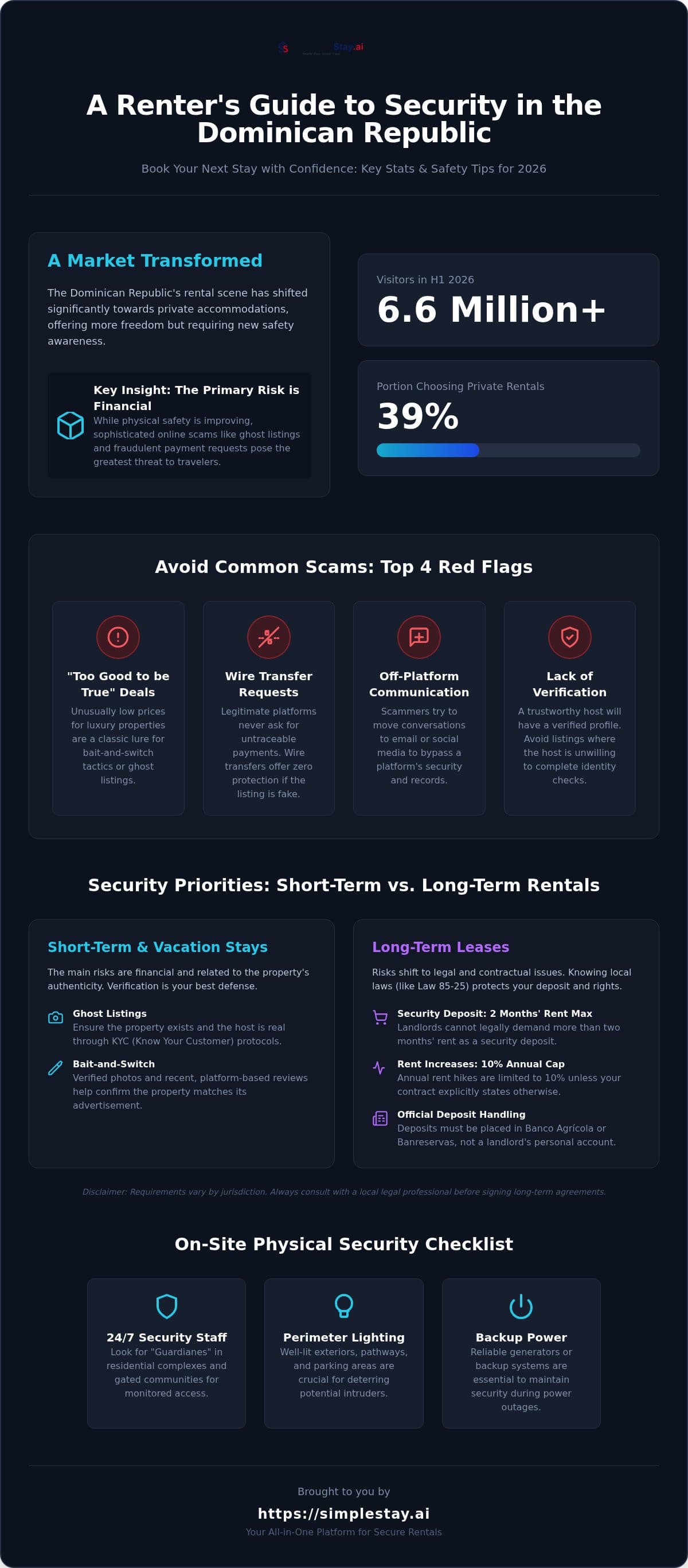
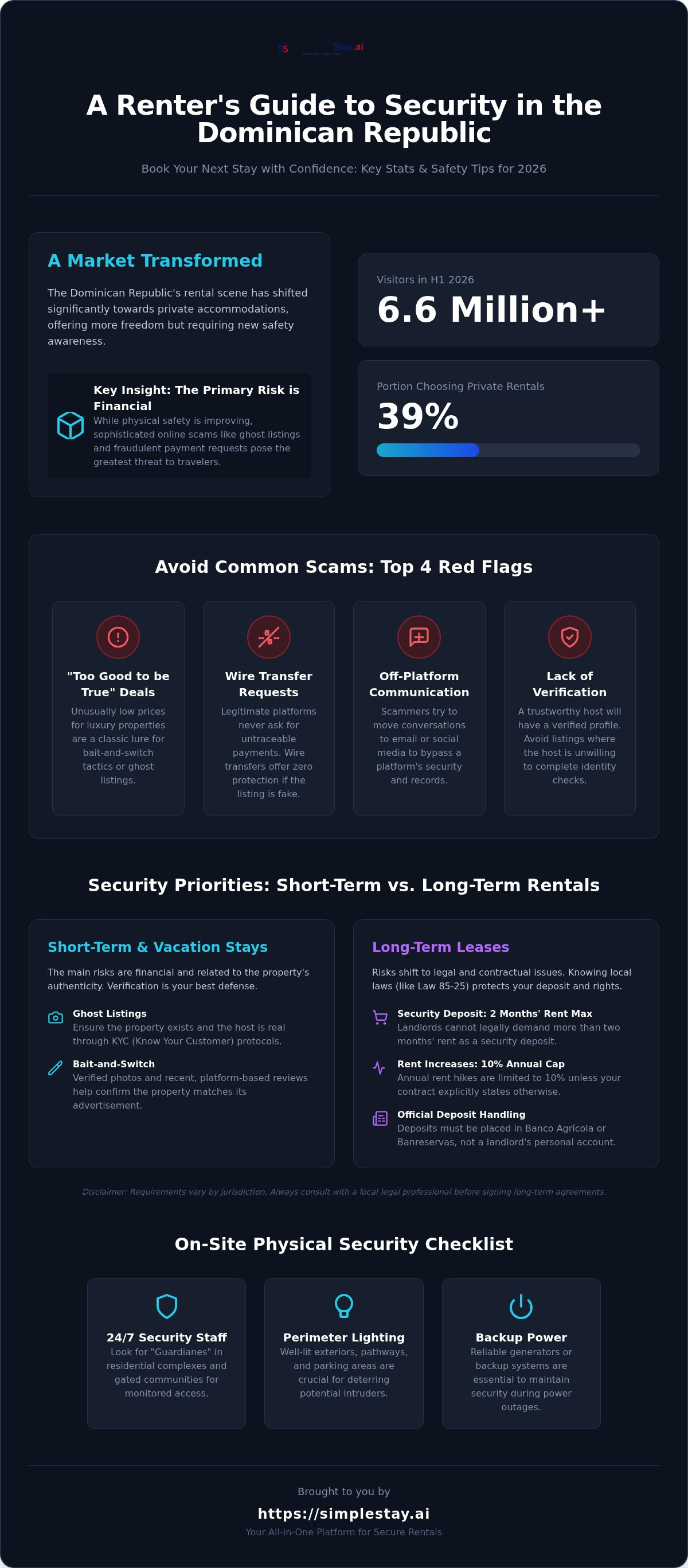
In the first half of 2026, over 6.6 million visitors landed in the Dominican Republic, and nearly 39% of them chose private rentals over traditional resorts. This massive growth in independent travel makes finding a safe place to stay more important than ever. You might feel anxious about wiring money to a stranger or worried that those beautiful listing photos are too good to be true. It's a common concern, especially when "ghost listings" and bait-and-switch tactics are becoming more sophisticated.
This guide will help you master Dominican Republic rental security so you can book your next stay with total confidence. We'll show you how to spot red flags, navigate the latest 2026 rental laws, and use verified digital payments to protect your money. You'll learn how the new RENATUR registry affects your booking and why moving away from cash transactions is the smartest move you can make. We've simplified the process so you can focus on your trip instead of worrying about your deposit.
Key Takeaways
- Balance the benefits of gated communities with authentic local stays by understanding the current rental landscape.
- Discover why rigorous identity verification is the most effective way to eliminate ghost listings and verify your host.
- Master Dominican Republic rental security by learning to spot "too good to be true" pricing and avoiding dangerous wire transfer requests.
- Check your property for essential physical safety features, including secure perimeter lighting and reliable backup power systems.
- Learn how transparent, fee-free booking platforms are modernizing the market and protecting your rental deposits.
Table of Contents
Understanding the Rental Security Landscape in the Dominican Republic
The Dominican Republic rental market has transformed. It isn't just about massive all-inclusive resorts anymore. In early 2026, short-term rentals made up 39% of all visitor accommodations. This shift toward private villas and apartments gives you more freedom, but it changes how you should approach Dominican Republic rental security. While Crime statistics in the Dominican Republic show a declining homicide rate of 7.05 per 100,000 as of mid-2026, the biggest threat to your trip isn't physical. It's financial fraud. Additionally, robberies dropped by 34.73% in the first two months of 2026 compared to the previous year, showing a clear trend toward a safer environment for travelers.
Relying on word-of-mouth or cash-only deals is a gamble you don't need to take. Scammers often use social media to pose as owners, demanding untraceable wire transfers for "exclusive" deals. These informal markets lack the verification protocols found on modern digital platforms. To strengthen your Dominican Republic rental security, look for listings that have been vetted by a third party. Moving your search to digital-first platforms reduces the friction of manual verification and keeps your money safe from sophisticated scams.
The Difference Between Short-Term and Long-Term Security
Your security priorities change based on how long you stay. Vacationers usually face "ghost listings" where the property doesn't exist or doesn't match the photos. For long-term renters, the risks are legal and contractual. Under Law 85-25, which took effect in August 2025, landlords must follow specific rules to ensure transparency:
- Limit security deposits to a maximum of two months' rent.
- Deposit all security funds into Banco Agrícola or Banreservas rather than personal accounts.
- Limit annual rent increases to 10% unless the contract specifies a different arrangement.
Knowing these local laws protects your wallet over the long haul and ensures you aren't overpaying upfront for your stay.
Common Myths About Safety in Dominican Accommodations
Many travelers believe that only expensive resorts are safe. The reality is quite different. Many residential complexes employ "Guardianes" or dedicated security staff who monitor entrances around the clock. These gated communities often provide a more secure environment than unmonitored budget hotels. A verified private rental in a well-managed building offers both privacy and professional protection. Focus on verification and the presence of physical security staff rather than just a high price tag. Don't let old myths limit your choices when searching for a perfect stay.
Disclaimer: Requirements for rental contracts and taxes vary by jurisdiction. You should always consult with a local legal professional before signing long-term agreements.
The Role of Identity Verification in Secure Bookings
Identity verification is the digital bridge of trust between strangers. In the Caribbean rental market, this process serves as the most effective deterrent for scammers who rely on anonymity to exploit travelers. When a platform requires "KYC" (Know Your Customer) protocols, it forces hosts to stand behind their listings with government-backed proof. This layer of Dominican Republic rental security ensures that the person you're messaging is the actual owner or authorized manager of the property.
The U.S. State Department security report highlights that fraud and petty crime are more prevalent when transactions happen in unmonitored spaces. By moving your booking to a verified ecosystem, you eliminate the shadow of doubt that often accompanies international rentals. Host identity verification creates a documented trail that discourages malicious behavior before it even starts. For guests, this means your "dream villa" is backed by a real person with a verified history.
What a Verified Host Profile Looks Like
A secure host profile isn't just a bio and a few photos. It involves a multi-step check that includes government-issued ID submission and real-time facial recognition. This technology ensures the person managing the rental isn't using a stolen identity or a fake persona created for a "ghost listing." When you evaluate a listing, look for these specific markers of trust:
- A verification badge that confirms the host's ID has been matched with their legal documents.
- A transparent history of platform-internal reviews from previous guests.
- A professional communication style that stays within the platform's secure messaging system.
You should always avoid listings where the host refuses to use platform-based verification. If a host tries to move the conversation to WhatsApp or Telegram to avoid these checks, it's a major red flag for your Dominican Republic rental security. Reliable hosts value the protection that verification provides to both parties.
Why Guests Should Also Be Verified
Trust isn't a one-way street; it's a two-way ecosystem. When guests undergo vacation rental identity verification, it protects the local community and the property owner's investment. Owners are more likely to offer better rates and flexible terms to guests they know have been vetted. This process also reduces friction during check-in, as many residential complexes require pre-authorization for visitors. Being verified allows for a smoother, professional entry into your temporary home without the need to hand over physical passports to security guards.
Building this level of mutual trust is the future of Caribbean hospitality. If you're a property owner looking to attract high-quality, vetted travelers, you can register your property today to join a network built on transparency and safety. This proactive approach ensures everyone feels valued and protected throughout the stay.
Avoiding Scams: From Wire Transfers to Digital Payments
Scams in the Caribbean often follow a predictable pattern. They rely on creating a false sense of urgency to bypass your intuition and rush your decision. When you prioritize Dominican Republic rental security, your first line of defense is the payment method you choose. Scammers will push you to "lock in the deal" by sending money immediately via Western Union, MoneyGram, or direct wire transfer to a personal bank account. These methods are essentially cash. Once the money is sent, it's gone forever with no way to recover it.
If a luxury villa is priced significantly lower than similar properties in the area, it's likely a trap. The Canadian government travel advisory specifically warns visitors about the prevalence of fraud and financial scams. Using a credit or debit card through a verified platform creates a digital paper trail that protects you. This trail is your strongest asset. It provides you with a clear path to dispute a charge through your bank if the listing turns out to be a "ghost" property or if the amenities are intentionally misrepresented upon arrival.
Digital Rent Payments vs. Cash Culture
The Dominican market is moving away from its traditional cash-only roots. This evolution toward online-ready transactions is a significant win for both travelers and professional hosts. Digital payments remove the friction and risk of carrying large amounts of pesos or visiting local banks for withdrawals. You can also leverage these transactions to earn travel rewards while maintaining a high level of security. Disclaimer: Please consult a financial professional regarding credit card interest rates and your individual financial obligations.
Protecting Your Deposit and Rental Agreement
A secure rental is built on a solid agreement. Your contract should clearly state how the security deposit is handled and under what conditions it's returned. Under current 2026 standards, secure platforms act as a neutral third party for payment disbursement. This means the host doesn't receive the full payment until you've successfully checked in and verified the property. This escrow-style system effectively eliminates the risk of a host disappearing with your deposit. For more tips on selecting a safe unit, read our Dominican Republic apartment rentals guide. Always ensure your contract includes a maintenance clause to handle any physical security issues that might arise during your stay.
Physical Security Checklist for Your Dominican Rental
A 'Safe Property' standard for Caribbean rentals in 2026 is defined by the integration of physical barriers, reliable backup power, and verified digital access controls. When you evaluate a listing, you must look beyond the aesthetics of the pool or the view. High-quality Dominican Republic rental security starts with the property's ability to maintain its perimeter even during a power outage. This is where "Inversors" or backup battery systems become essential. They ensure that electronic gates, security cameras, and outdoor lighting stay active 24/7. Without backup power, a high-tech security system becomes useless the moment the local grid fluctuates.
Evaluate the surrounding area through the lens of visibility and maintenance. You don't need to know specific neighborhood names to recognize a property that prioritizes safety. Look for well-lit access roads and clear lines of sight from the entrance to the street. Properties with overgrown vegetation or broken perimeter lights often signal a lack of attention to security. Professional hosts will proactively mention their security features because they understand that peace of mind is a top priority for international travelers in 2026.
Connectivity and Communication Safety
Reliable Wi-Fi is no longer just a luxury for streaming; it's a fundamental safety feature. For those following a solo travel Dominican Republic safety guide, constant connectivity is your lifeline to the outside world. It allows you to share your real-time location with family and access emergency services instantly. Upon arrival, you should also set up local communication channels. Many residential complexes use dedicated WhatsApp groups for security alerts, providing you with a direct link to neighbors and management if something feels off.
Evaluating Managed Complexes vs. Standalone Homes
Managed complexes often provide 24/7 security personnel at the main entrance. These "Guardianes" act as a powerful deterrent and manage visitor access, which simplifies your stay. However, standalone homes are increasingly adopting smart home technology to bridge the gap. Look for properties equipped with Ring doorbells, digital keypads, and motion-activated cameras. These tools allow you to monitor the property from your phone. Before you book, ask your host about their emergency protocols. You should know exactly who to call for a medical issue or a maintenance emergency before you even unpack your bags.
How SimpleStay.ai Secures Your Dominican Stay
SimpleStay.ai isn't just another booking site. We've built an ecosystem where Dominican Republic rental security is the standard, not an upgrade. By removing the high commission structures of traditional platforms, we create a more honest relationship between hosts and guests. Hosts pay a flat $50 monthly subscription for rentals, which means they don't have to inflate their prices to cover platform fees. For you, this results in $0 guest service fees and total transparency from the moment you start your search.
We believe that a well-maintained property is a safe property. Because our hosts retain 100% of their booking revenue, they have more resources to invest in the security features we've discussed, such as reliable backup power systems and high-quality locks. We handle the complexities of Caribbean hospitality by providing a platform that mandates identity verification for every single listing. You won't find anonymous hosts or unvetted "ghost listings" here. Every villa and apartment on our platform is backed by a real, checked individual.
Modernizing the market means moving away from risky cash transactions that have historically plagued the region. SimpleStay.ai facilitates secure online credit card payments for both vacation stays and long-term leases. This protects your money and supports the local economy by formalizing the rental sector. You get the security of a digital trail while local hosts get a reliable, professional way to manage their businesses without the stress of handling large amounts of physical cash.
A Safer Way to Book Villas and Apartments
Browsing verified listings across the country shouldn't feel like a gamble. Our commitment to Dominican Republic rental security involves a rigorous vetting process that ensures every property exists exactly as described. This focus on quality over quantity means you spend less time worrying about scams and more time enjoying your stay. Whether you're looking for a luxury villa or a long-term apartment, our platform acts as a filter for reliability and professionalism.
Getting Started with Verified Rentals
Joining our community is straightforward and efficient. Travelers create a verified profile through a secure process that confirms their identity, building that two-way street of trust essential for a smooth stay. Once verified, you can explore listings with the peace of mind that the pricing you see is exactly what you'll pay. There are no hidden platform surcharges added at the final checkout screen. This predictable pricing model allows you to plan your budget with precision and confidence.
Take the first step toward a worry-free Caribbean experience. Explore our verified vacation rentals and book with confidence knowing that your safety and satisfaction are our top priorities.
Secure Your Future Stays in the Caribbean
The landscape of Dominican Republic rental security has shifted toward a more transparent, digital-first approach. You now have the tools to verify the person behind the listing and protect your money through secure credit card processing. By moving away from untraceable wire transfers and choosing properties with verified identities, you eliminate the most common risks facing travelers in 2026. Remember to look for physical indicators of safety, such as backup power systems and managed entry points, to ensure your stay is as comfortable as it is secure.
Finding a legitimate rental doesn't have to be a stressful experience. With zero guest booking fees and a rigorous verification process for every host and guest, you can focus on the beauty of the island instead of the validity of your reservation. It's time to embrace a higher standard of Caribbean hospitality where transparency and trust come first. Take control of your travel experience by choosing a platform that prioritizes your peace of mind and simplifies the entire booking process.
Frequently Asked Questions
Is it safe to rent an apartment in the Dominican Republic through private hosts?
Renting through private hosts is safe when you prioritize Dominican Republic rental security by choosing platforms that verify every user. This process eliminates the risk of "ghost listings" where the property doesn't exist. By using a verified ecosystem, you ensure the host has provided government-issued identification. This creates a professional environment where both parties are accountable, making private rentals a viable and often superior alternative to traditional hotels.
How do I know if a Dominican Republic rental listing is a scam?
You can identify a scam by looking for red flags like "too good to be true" pricing or a host who creates a false sense of urgency. Scammers often pressure you to pay quickly to "save the date" before someone else books. If a host refuses to use the platform's messaging system or won't provide verification details, it's a major warning sign. Always check for a verified badge on the host's profile before committing.
Can I pay my rent in the Dominican Republic with a credit card?
Yes, you can pay your rent and security deposits using an eligible credit or debit card through modern platforms like SimpleStay.ai. This shift away from cash transactions provides a secure digital trail for your money. It allows you to manage your travel expenses without the risks of carrying large amounts of physical currency. Note that while this adds security, you should consult a financial professional regarding your specific credit card interest rates.
Do I need a written contract for a short-term vacation rental in the DR?
A digital agreement or written contract is highly recommended to protect your interests even for short stays. It should clearly outline the check-in process, maintenance responsibilities, and the terms for returning your security deposit. Having these details in writing prevents misunderstandings and provides a basis for dispute resolution. Platforms that facilitate these agreements act as a neutral third party, ensuring that both the guest and host follow the agreed-upon rules.
What should I do if a host asks me to wire money outside of the platform?
If a host asks for a wire transfer via Western Union or a direct bank deposit, you should refuse and report the listing. These payment methods are untraceable and offer no protection if the rental turns out to be fraudulent. Legitimate platforms process payments internally to keep your funds secure until you've successfully checked into the property. Staying within the platform's payment system is the most effective way to maintain Dominican Republic rental security.
Are gated communities the only safe option for travelers in the Dominican Republic?
Gated communities are popular for their 24/7 security staff, but they aren't the only safe choice. Many standalone homes now use smart technology like Ring doorbells and motion-activated cameras to provide high levels of protection. The key is to look for properties with "Inversors" or backup power systems that keep security features running during outages. Choosing a verified property with professional management is often more important than the specific housing type.
What rights do I have as a tenant in the Dominican Republic?
Under Law 85-25, which was updated in 2025, residential tenants have specific protections regarding deposits and rent increases. Landlords can legally require a maximum of two months' rent as a security deposit. Additionally, annual rent increases are capped at 10% unless your contract explicitly states otherwise. These laws are designed to create a more transparent and fair market for both local residents and international travelers seeking long-term stays in the country.
How does identity verification protect me as a renter?
Identity verification protects you by ensuring that the person you're dealing with has been vetted against government databases. It uses facial recognition and ID matching to confirm the host's legal identity before they can list a property. This process discourages criminal activity and builds a community of trust. When you book a verified listing, you know the host is real and that the platform has a record of their credentials if an issue arises.

Article by
Jaime Robledo, MBA
Jaime Robledo, MBA, is a technology leader, entrepreneur, and founder based in Santo Domingo, Dominican Republic, with more than two decades of experience building, modernizing, and securing enterprise technology environments. His career has spanned consulting, media, finance, education, healthcare, and large-scale corporate IT, with deep expertise in Microsoft technologies, cloud infrastructure, endpoint management, automation, cybersecurity, AI, and digital transformation.
Throughout his career, Jaime has led complex technical initiatives involving Microsoft Intune, Microsoft 365, Defender, SCCM, Azure, PowerShell, DevOps, Windows modernization, and enterprise infrastructure. His experience combines hands-on engineering, technical leadership, business strategy, and execution.
Today, Jaime is focused on building technology companies designed specifically for Latin America. He is the founder of SimpleStay.ai, a rental and hospitality platform created to make booking, hosting, rent payments, and property management more transparent and affordable through flat pricing, zero guest service fees, secure payments, identity verification, and support for short-term, hotel, and long-term rentals.
He also built United Empresas, a marketplace connecting customers with local service professionals for discovery, booking, payments, and business growth.
Beginning in January, Jaime will also be building a new fintech platform in public, focused on making digital payments and money movement simpler and more accessible across Latin America.
Across every venture, Jaime’s mission is the same: use technology, AI, automation, and practical business systems to reduce friction, create jobs, strengthen small businesses, expand financial access, and improve people’s lives throughout Latin America.