Publicado em 25 de agosto de 2026
Best Way to Pay for Rentals in the Dominican Republic: A 2026 Guide
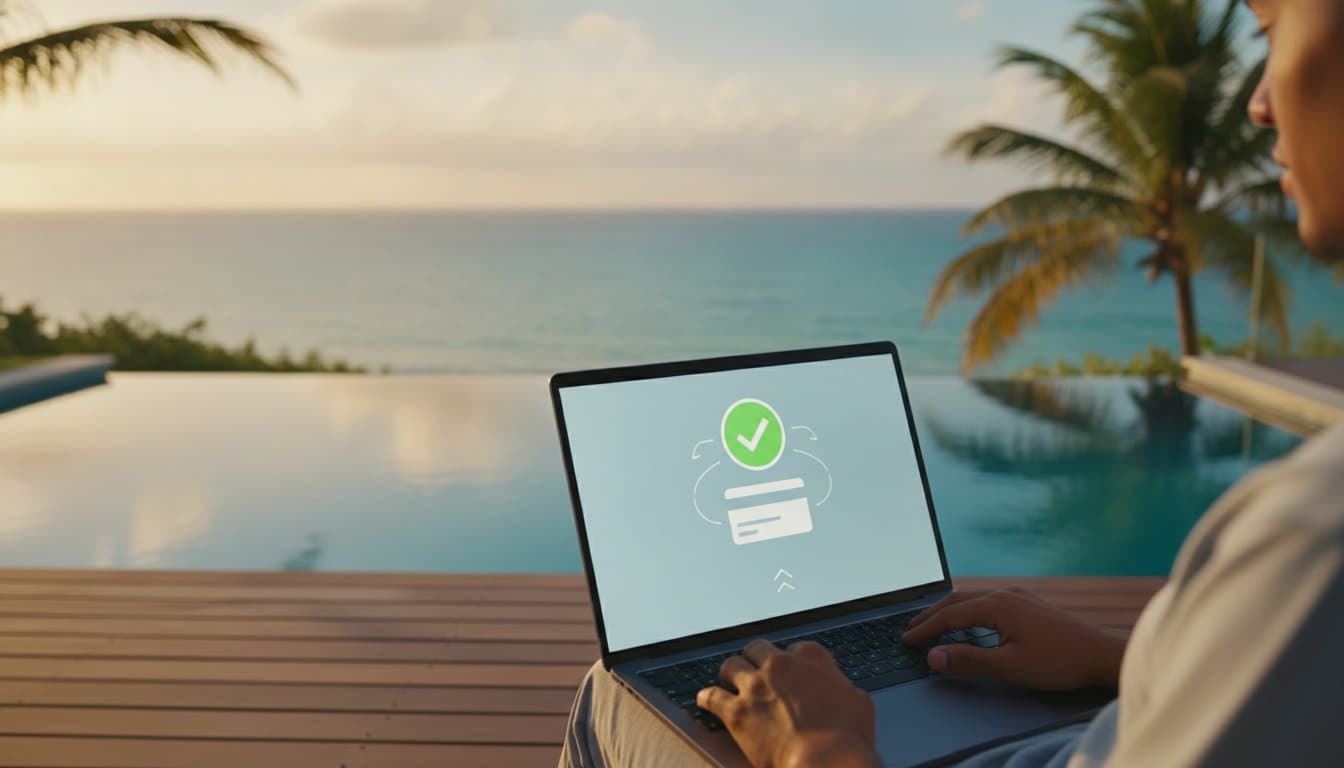
You might think carrying stacks of cash or paying a 20% service fee on a global booking site is just part of the price for a Caribbean getaway. It's frustrating to watch your budget disappear into hidden fees or to feel the anxiety of walking around with thousands of dollars just to settle a long-term lease. Finding the best way to pay for rentals in Dominican Republic shouldn't feel like a gamble with your security or your wallet. You deserve a transparent process that respects both your time and your money.
In this 2026 guide, we'll show you how to bypass traditional banking headaches, avoid currency exchange traps, and secure your stay using modern digital tools. You will discover how the market has evolved from risky wire transfers to secure, card-based systems that offer 0% guest booking fees. We'll also break down the differences between USD and DOP payments to ensure you never lose money on a bad exchange rate again. Whether you're booking a weekend villa or a year-long apartment, these strategies will keep your funds safe and your experience seamless.
Key Takeaways
- Learn why shifting from cash to digital payments is the most effective way to protect your funds and create a clear paper trail.
- Understand how to balance US Dollars and Dominican Pesos to avoid losing money on unfavorable currency exchange rates.
- Discover why verified digital platforms are the best way to pay for rentals in Dominican Republic to ensure both guest and host security.
- Master a step-by-step verification process that confirms host identity and total pricing before you commit to a lease.
- See how you can use a credit card for monthly rent payments while eliminating the high service fees common on traditional booking sites.
Table of Contents
- Understanding the Rental Payment Landscape in the Dominican Republic
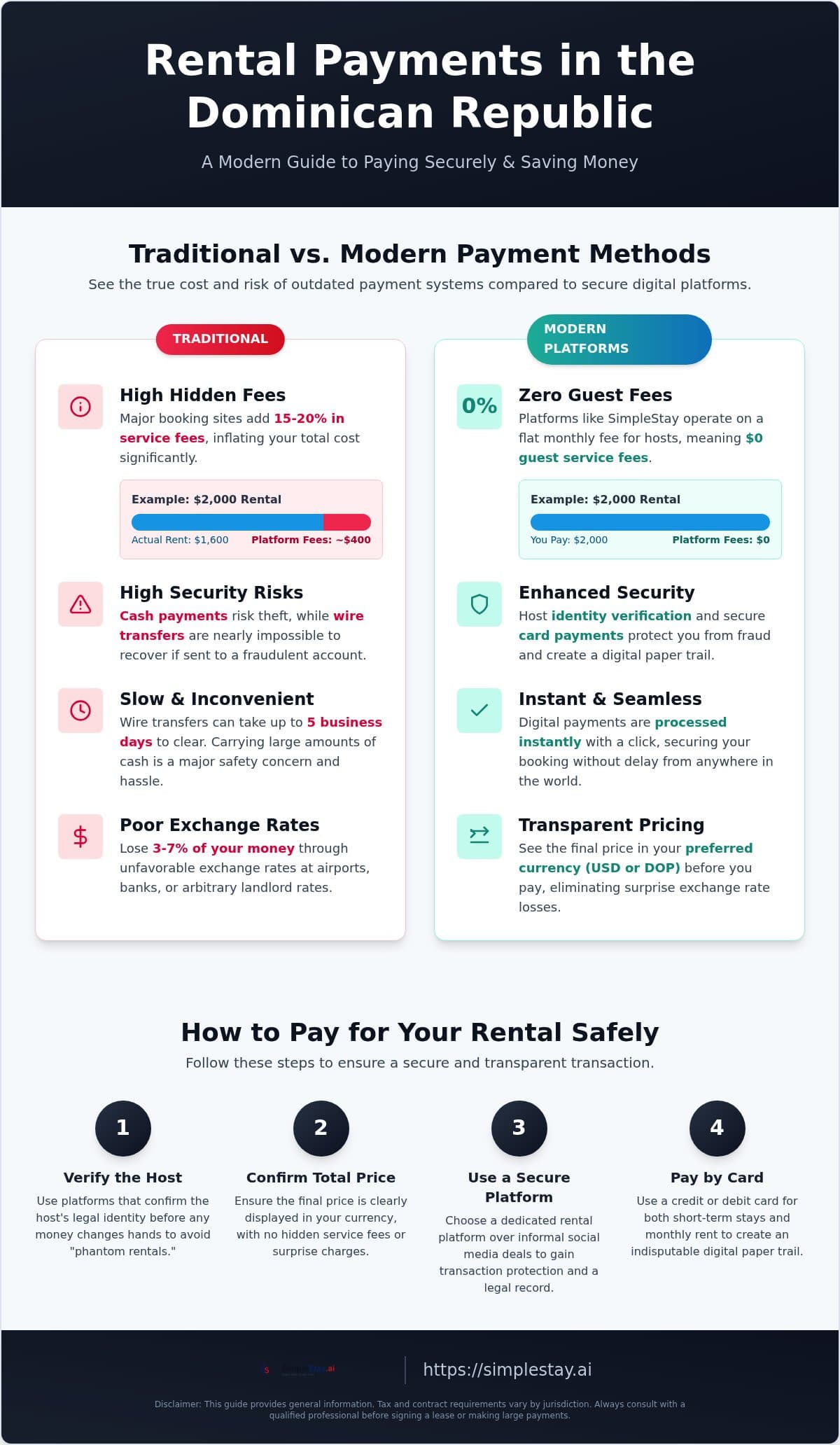
- Comparing Traditional vs. Modern Payment Methods
- The Risks and Rewards of Paying for Rentals in Cash
- How to Safely Pay for Your Rental: A Step-by-Step Guide
- Why SimpleStay is the Best Way to Pay for Rentals in the Dominican Republic
Understanding the Rental Payment Landscape in the Dominican Republic
The Dominican Republic is shedding its reputation as a cash-only destination. For a long time, renting an apartment meant showing up with an envelope full of bills or trusting a stranger with a risky bank wire. Today, a more sophisticated rental ecosystem is taking hold. Finding the best way to pay for rentals in Dominican Republic is no longer just a question of convenience; it's a matter of financial security. As the market modernizes, travelers and long-term tenants are moving toward systems that offer transparency and protection.
The Shift Toward Digital Rental Payments
The influx of digital nomads and remote workers has forced the local market to evolve. These professionals don't carry large amounts of physical currency. They expect to pay with a click and receive a digital receipt. The decline of the "cash-on-arrival" model is a welcome change for personal safety. Carrying thousands of dollars through a busy airport makes anyone a target for theft. Verified platforms are now replacing the "handshake deals" common on social media. These digital systems provide a legal record of the transaction, which is essential for staying compliant with local rental regulations. Tax and contract requirements vary by jurisdiction, so you should always consult with a professional before signing a long-term lease.
Currency Considerations: USD vs. DOP
Navigating the official currency of the Dominican Republic can be tricky for first-time visitors. While the US Dollar (USD) is widely accepted in tourist zones, the Dominican Peso (DOP) is the backbone of the local economy. Understanding when to use each can save you a significant amount of money.
- USD Advantages: Most high-end villas and short-term vacation rentals prefer USD. It keeps pricing stable for international travelers and avoids daily fluctuations.
- DOP Advantages: Paying in pesos can sometimes be more cost-effective for long-term residential leases, provided you have a reliable way to exchange currency without high bank fees.
To avoid losing 3% to 7% on currency exchange, don't rely on airport ATMs or local bank counters for large rent payments. The best way to pay for rentals in Dominican Republic is through a system that displays the final price in your preferred currency before you authorize the transaction. This transparency prevents the "hidden" losses that occur when a landlord applies their own arbitrary exchange rate at the moment of payment.
Wire Transfers and Identity Verification
International wire transfers are becoming a relic of the past for savvy renters. They often come with high intermediary bank fees and can take up to five business days to clear. If you send money to a fraudulent account, it's nearly impossible to recover. Modern platforms now prioritize identity verification as the first line of defense. By confirming the host's legal identity before any money changes hands, you drastically reduce the risk of "phantom rentals." This professional approach ensures that your funds reach the actual property owner, providing peace of mind in a market that was once dominated by informal, unverified transactions.
Comparing Traditional vs. Modern Payment Methods
Choosing how to send your money is just as important as choosing the property itself. While some travelers still rely on methods used a decade ago, the financial landscape has shifted. The best way to pay for rentals in Dominican Republic now involves a balance of low costs and high security. Legacy systems often prioritize their own profit margins over your peace of mind, leaving you to deal with inflated prices and minimal protection.
The Hidden Costs of Traditional Booking Sites
Most major booking platforms operate on a commission-based model. This means they add a guest service fee, often between 15% and 20%, on top of the host's nightly rate. When you book a luxury villa for a week, you're essentially paying hundreds of extra dollars just for the privilege of using the website. These fees don't go to the property owner or improve your stay; they simply pad the platform's revenue. Savvy travelers are now seeking out zero booking fee vacation rentals to ensure their entire budget goes toward the actual experience. By removing the middleman's markup, you get the exact price the host intended without any surprises at checkout.
International Wire Transfers and Bank Fees
Bank wires might seem professional, but they're often the most expensive and least secure option. Standard SWIFT transfers to Dominican banks in 2026 typically incur flat fees from both the sending and receiving banks, plus potential intermediary bank charges. Beyond the cost, wires offer zero fraud protection. Once the money leaves your account, it's gone. If a rental turns out to be a scam, your bank cannot "charge back" a wire transfer. This is a significant risk compared to modern digital payments. Credit cards provide a layer of security that bank wires simply can't match, allowing you to dispute unauthorized charges if something goes wrong.
Safety Risks of Cash and ATM Usage
Carrying large sums of cash, whether in US Dollars or Pesos, is never recommended. It makes you a visible target and offers no paper trail for your deposit or rent. Additionally, relying on local machines can be risky. Government advisories often warn about credit card and ATM fraud, suggesting that travelers only use machines in well-lit, secure areas like bank branches. Paying for your rental through a verified digital platform eliminates the need for these risky cash withdrawals. It keeps your funds digital and protected until they reach the verified host. For property owners, modernizing your business by moving away from cash is easy when you register your rental property on a platform that handles secure card processing for you.
Ultimately, the best way to pay for rentals in Dominican Republic is the method that provides a clear digital receipt and verified identity. Modern subscription-based platforms are leading this charge by offering $0 guest fees and secure payment gateways, making high-risk cash deals and expensive legacy site commissions a thing of the past.
The Risks and Rewards of Paying for Rentals in Cash
While digital options are growing, cash still accounts for over 90% of all transactions in the country as of late 2025. This can make it feel like the default choice for everything from groceries to monthly rent. However, relying on physical bills for high-value transactions is rarely the best way to pay for rentals in Dominican Republic. It's a method that carries significant personal and financial weight that most travelers and long-term tenants aren't prepared for.
Carrying rent money from the airport or a bank branch makes you a target for theft. If you lose that cash or it's stolen, there's no way to recover it. Beyond physical safety, cash offers zero protection in a legal dispute. Without a digital record, proving you paid your security deposit or your monthly rent becomes your word against the landlord's. Under Law 85-25, landlords are legally required to deposit security deposits with the Banco Agrícola de la República Dominicana, but cash transactions often bypass these formal channels, leaving you with no recourse if your deposit isn't returned.
Safety Protocols for Cash Transactions
If you find yourself in a situation where cash is the only option, you must protect yourself. Never hand over money without a signed, physical receipt that includes the date, the exact amount, and the property address. Ask for a copy of the host's government-issued ID to ensure the person taking your money is the actual owner or authorized manager. This creates a basic level of accountability.
Always verify the property in person before any exchange. Scammers often use high-pressure tactics to demand a cash deposit before you even arrive in the country. Legitimate hosts will understand your need for verification. For currency exchange, stick to bank-affiliated exchange houses or the banks themselves. Street money changers might offer slightly better rates, but they often use counterfeit bills or short-change unsuspecting travelers, which can lead to even greater losses.
The Logistics of ATM Withdrawals
Trying to pay monthly rent through an ATM is a logistical nightmare. Most Dominican banks cap daily withdrawals between RD$10,000 and RD$20,000. If your rent is US$1,200, you might need to visit an ATM five or six days in a row just to gather the necessary funds. This constant back-and-forth to the bank increases your exposure to potential security risks.
You'll also face "double fees." Your home bank will charge you for an out-of-network withdrawal, and the local Dominican bank will add its own fee, often ranging from RD$200 to RD$300 per transaction. These costs add up quickly and eat into your travel budget. Digital payment platforms solve this limit problem by allowing you to pay the full amount in one secure transaction using a credit or debit card. It's the most efficient way to maintain a clear paper trail while keeping your cash in the bank where it's safe and insured.
How to Safely Pay for Your Rental: A Step-by-Step Guide
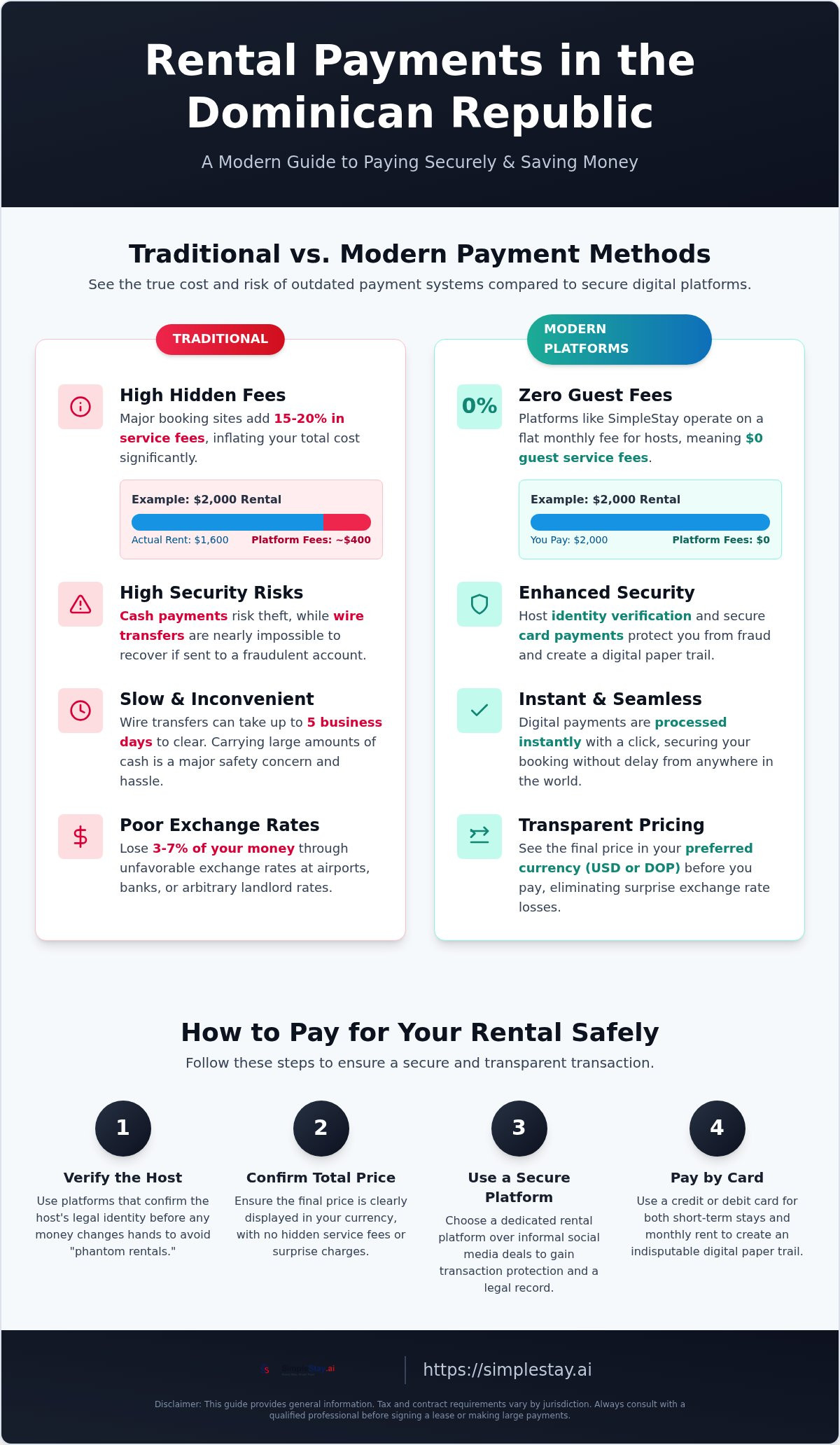
Securing a property in a foreign country requires more than just a good eye for photos. It requires a disciplined payment process. Following a structured checklist is the best way to pay for rentals in Dominican Republic to ensure your money stays safe and your stay remains stress-free. You shouldn't feel rushed into a transaction before you've completed your due diligence.
Verifying Your Host and Property
Your first step is to confirm that the person you're talking to actually has the legal right to rent the property. Scammers often scrape photos from legitimate listings and post them on social media at a deep discount. A "verified host" badge on a reputable platform means a third party has checked their government ID and property ownership. Using vacation rental identity verification tools allows you to filter out high-risk listings before you even start a conversation. Watch for red flags like a host asking you to move the conversation to an unencrypted chat or requesting an "emergency" wire transfer to a personal bank account.
Confirming Total Costs and Terms
Never authorize a payment until you have the final price in writing. In the Dominican Republic, it's common for electricity or cleaning fees to be billed separately, especially for stays longer than a week. Ensure the agreement clearly states what's included. You should also review the cancellation and refund policy before hitting the pay button. Since local contract requirements can vary by jurisdiction, consulting a professional for long-term residential leases is always a wise move.
Utilizing Credit Card Protections
Opting for a credit card is a strategic choice for security. This is particularly true for digital nomad rentals in the Dominican Republic, where stays often last several months. Credit cards offer chargeback protection if a property is significantly misrepresented or if a host disappears after taking your deposit. It's important to remember that paying rent by credit card is a security tool; it doesn't eliminate your interest payments or other financial obligations to your bank.
Keeping Communication On-Platform
Finally, use the secure messaging systems provided by the rental platform. If a dispute arises, these logs serve as your primary evidence. If you move to private email or external chat apps, you lose that layer of protection. Once you're satisfied with the verification and the terms, you can finalize the transaction with confidence. You'll have a digital trail and a verified partner on the other side of the screen.
Why SimpleStay is the Best Way to Pay for Rentals in the Dominican Republic
SimpleStay removes the friction that has defined Dominican rentals for decades. By focusing on transparency and security, it provides the best way to pay for rentals in Dominican Republic without the 15% to 20% markups found on legacy booking sites. You pay exactly what the host asks, with exactly $0 in platform booking fees added at checkout. This clarity allows you to budget with precision, whether you're staying for a weekend or a year. It's a professional solution that respects both your money and your peace of mind.
Modernizing the Dominican Rental Market
The platform replaces the outdated commission-based model with a straightforward $50 per month subscription for hosts. This shift is a win for everyone. Hosts keep 100% of their booking revenue, which often results in more competitive pricing for you. It also eliminates the pressure to engage in risky off-platform cash deals. You can settle your monthly rent using an eligible credit or debit card securely online. This digital approach bypasses the daily ATM limits and high bank fees we discussed in previous sections. It creates an instant, verifiable paper trail for every transaction. Remember that using a card is a security tool; it doesn't eliminate your interest or other financial obligations to your bank. Additionally, tax and contract requirements vary by jurisdiction, so you should always consult with a professional for long-term stays.
Getting Started with Secure Bookings
Safety is the foundation of this ecosystem. SimpleStay uses rigorous identity verification for both travelers and hosts to eliminate fraud and phantom listings. This ensures you're dealing with real people and legitimate properties before any money changes hands. Browsing verified listings is simple and fast, whether you're looking for a beachfront villa or a modern city apartment. Once you find the right property, the verification process takes only a few minutes to complete. This modern system acts as a filter for quality and trust, allowing you to focus on enjoying your stay rather than worrying about payment logistics. It consolidates your management and payments into one straightforward platform that works for both short-term vacations and long-term leases.
Explore verified properties in the Dominican Republic with zero booking fees
Secure Your Next Dominican Getaway with Confidence
Modernizing your approach is the best way to pay for rentals in Dominican Republic because it combines safety with total pricing transparency. By choosing platforms that prioritize identity verification and secure credit card processing, you eliminate the risks associated with carrying large amounts of cash or sending unverified bank wires. You also protect your budget by avoiding the 15% to 20% guest service fees common on legacy booking sites.
SimpleStay facilitates this transition by offering zero guest service fees and verifying every host and guest on the platform. This ensures that 100% of your payment goes toward your stay rather than unhelpful middleman markups. Whether you're booking a short-term villa or a long-term apartment, you can handle your payments with a clear digital record and full fraud protection. You deserve a rental experience where you pay exactly what the host asks without any hidden surprises.
Focus on enjoying the island and let verified systems handle the security of your transactions. We're excited to help you discover a more secure and cost-effective way to explore the beauty of the Dominican Republic.
Frequently Asked Questions
Is it safe to use my credit card for rentals in the Dominican Republic?
It's safe to use your credit card if you book through a verified digital platform that uses secure, encrypted processing. Avoid sharing your card details over email or messaging apps. Digital payments are the best way to pay for rentals in Dominican Republic because they offer chargeback protection. This safeguard is vital if the property is misrepresented, providing a layer of security that cash or wire transfers simply cannot match.
Can I pay my monthly apartment rent with a credit card in the DR?
You can pay your monthly rent with a credit card if your landlord uses a modern platform like SimpleStay. While the local market has historically relied on cash, digital rent payments are becoming the standard for long-term leases. This method allows you to avoid the low daily withdrawal limits at local ATMs and creates an instant digital receipt. It's an efficient way to manage your housing expenses while maintaining a clear financial record.
What are the typical fees for an international bank transfer to a Dominican landlord?
International bank transfers usually cost between $30 and $50 per transaction, depending on your home bank's policies. You may also face additional fees from intermediary banks and a receiving fee from the landlord’s Dominican bank. These costs add up quickly for monthly rent payments. Because wire transfers offer no fraud protection and take several days to clear, most savvy renters now prefer secure, card-based digital payment systems instead.
How do I avoid getting scammed when booking a villa in the Dominican Republic?
Avoid scams by only booking through platforms that require identity verification for both the host and the guest. Never send money via unverified wire services or Western Union. If a host pressures you to move the payment off-platform to avoid fees, it is a significant red flag. Always ensure you have a written agreement and use a payment method that offers dispute resolution to protect your funds from phantom listings.
Should I pay for my rental in US Dollars or Dominican Pesos?
Pay in the currency specified in your rental contract to avoid losing money on unfavorable exchange rates. Vacation rentals are typically priced in US Dollars, while local residential leases often use Dominican Pesos. If you have a choice, use a platform that offers transparent, fixed pricing. This prevents landlords from applying their own arbitrary exchange rates, which can often lead to a 3% to 5% increase in your actual costs.
What happens if I pay for a rental and the property doesn’t exist?
If you used a credit card on a verified platform, you can initiate a chargeback through your bank to recover the funds. This protection makes digital platforms the best way to pay for rentals in Dominican Republic. If you paid with cash or an unverified wire transfer, recovering your money is nearly impossible. You would need to file a formal complaint with local authorities, but unverified transactions leave no legal trail for recovery.
Are there platforms in the Dominican Republic that don’t charge guest booking fees?
Yes, SimpleStay is a leading platform that charges guests exactly $0 in booking fees. By using a subscription model for hosts rather than a commission-based system, the platform ensures you pay the host’s actual rate without unhelpful markups. This approach can save you 15% to 20% compared to legacy booking sites. It's a transparent way to book everything from beachfront villas to long-term apartments while keeping your entire travel budget for your stay.
What is the best way to handle security deposits for long-term rentals?
The most secure method is to pay the deposit through a digital system that provides a formal record of the transaction. Under Law 85-25, landlords are legally required to deposit these funds with the Banco Agrícola. Never provide a cash deposit without a signed contract and a copy of the landlord’s government ID. Using a digital platform ensures you have the necessary evidence to reclaim your deposit once your lease agreement successfully concludes.

Article by
Jaime Robledo, MBA
Jaime Robledo, MBA, is a technology leader, entrepreneur, and founder based in Santo Domingo, Dominican Republic, with more than two decades of experience building, modernizing, and securing enterprise technology environments. His career has spanned consulting, media, finance, education, healthcare, and large-scale corporate IT, with deep expertise in Microsoft technologies, cloud infrastructure, endpoint management, automation, cybersecurity, AI, and digital transformation.
Throughout his career, Jaime has led complex technical initiatives involving Microsoft Intune, Microsoft 365, Defender, SCCM, Azure, PowerShell, DevOps, Windows modernization, and enterprise infrastructure. His experience combines hands-on engineering, technical leadership, business strategy, and execution.
Today, Jaime is focused on building technology companies designed specifically for Latin America. He is the founder of SimpleStay.ai, a rental and hospitality platform created to make booking, hosting, rent payments, and property management more transparent and affordable through flat pricing, zero guest service fees, secure payments, identity verification, and support for short-term, hotel, and long-term rentals.
He also built United Empresas, a marketplace connecting customers with local service professionals for discovery, booking, payments, and business growth.
Beginning in January, Jaime will also be building a new fintech platform in public, focused on making digital payments and money movement simpler and more accessible across Latin America.
Across every venture, Jaime’s mission is the same: use technology, AI, automation, and practical business systems to reduce friction, create jobs, strengthen small businesses, expand financial access, and improve people’s lives throughout Latin America.